Live Christmas Tree Guide: 10 Easy Steps to Choose and Care for the Perfect Tree

A beautiful live Christmas tree has a quality that fills a room the moment it
arrives. Its full, gorgeous presence, a standout in any setting. The needles are deep green
with a slight sheen that catches the light, or like the silvery hue of the Fraser fir. The
needles feel pliable, not brittle, and stay attached. The tree has a sturdy, straight trunk,
giving it a strong, fresh appearance as if it was freshly cut.
The fragrance is unbelievably aromatic and the very best thing about a live tree,
that woodsy, clean crisp pine that instantaneously brings back childhood holiday
memories. As you pass the tree, everything evergreen rises from the branches, reminding
you that its alive! Your little stunner has generous, dense branches that looks like it was
pampered and shaped by sunlight, rain, and frosty air.
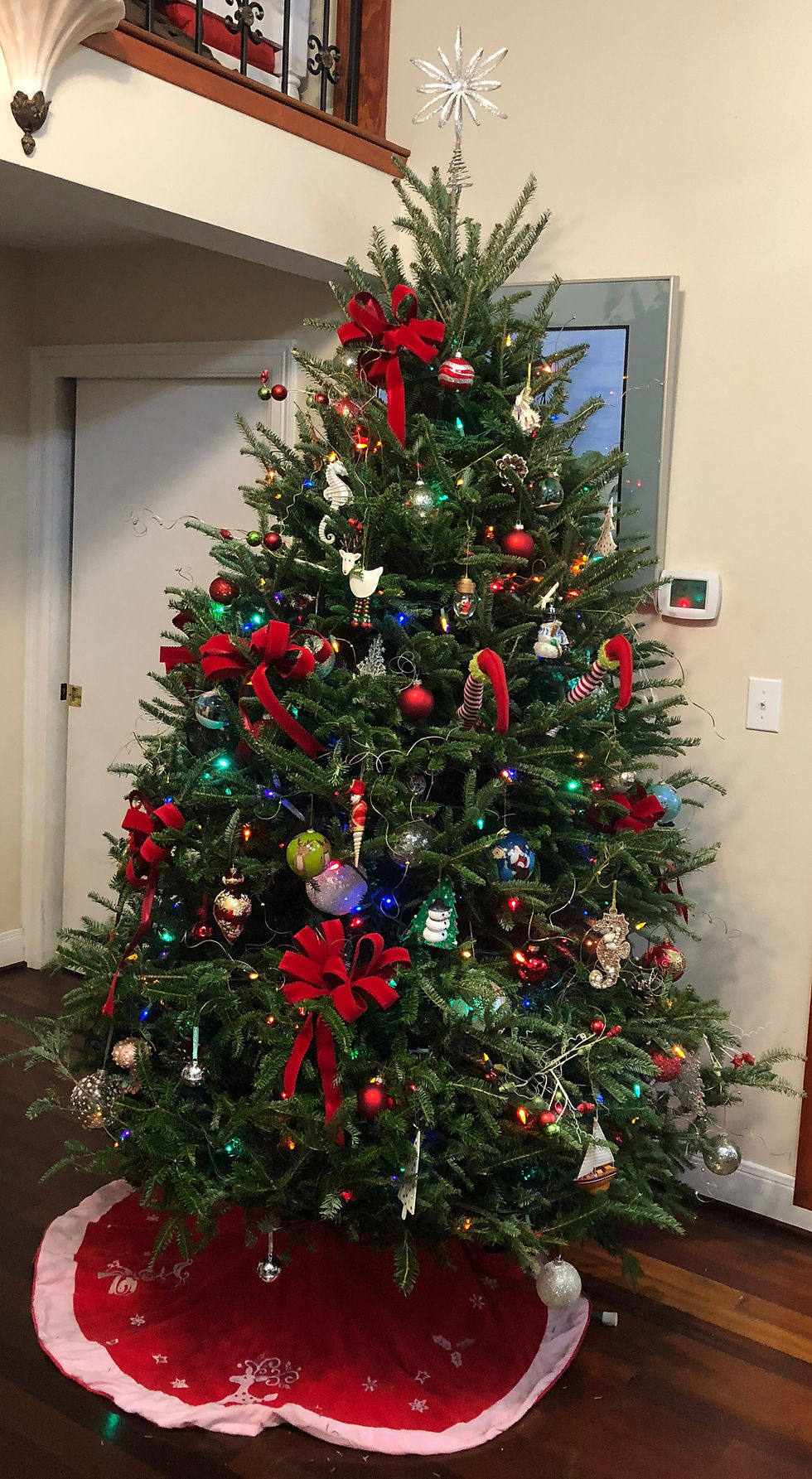
When decorated, our Christmas tree stands proudly, grabbing every eye in the
room, welcoming all with holiday cheer and comfort. The lights intertwined between
branches like bright shining rays of hope, reflect the warmth and beauty of our home.
Both elegant and enduring, it symbolizes tradition, celebration, and undeniable magic for
this very special time of year.
10 Easy Steps:
1. Decide on the type of live tree you prefer—Fraser fir, Douglas fir, or Noble fir, those
are the types in our area. Over the years, we’ve had each of them. Then, how does it
smell, it should make you close your eyes and remind you of Christmas. The tree should
have a full, symmetrical shape and be pretty. Don’t settle, give a few the old whir!

2. Measure the space where the tree will go, including ceiling height and tree-stand
width, so the tree is not too large once you take it home. I’ve had some I thought looked
about right and nada, too big, had to whack off the top.
3. Choose a tree lot or local farm known for fresh, healthy trees that are watered, look
good; not brown or withered. Get back and study the tree, it should have dense branches, not areas with missing patches. We’ve had some real dog shows over the years.

4. Look at the tree by giving it a light shake; if a large number of needles fall, pick a
fresher tree. Bend the branches, it should spring back easily, if not, move along. She ain’t
for you.
5. Check the trunk to ensure its straight and will fit easily into your tree stand. If it
doesn’t, get it trimmed when you buy it, we always do. You get home and it isn’t as easy
as it looks, trust me on this, a real nightmare on Elm.
6. Ask the seller to cut about ½ to 1 inch at the bottom of the trunk to help the tree absorb
water. We get that done at the store too. Funny how when you get home that chain saw,
or hand saw or seesaw (really) doesn’t seem to work. Good luck with that!
7. Have the tree wrapped or netted for safe transport, and secure it properly in your
vehicle, or on top. We were getting our tree this year and a man in the parking lot had his
tree on the top of his car; he was cussing to blue blazes. His bungee cord was a mite
small. It didn’t sit well with his wife.

8. At home, place the tree in a bucket filled with water for a couple hours and let it absorb
water if you can. If not, put it in a sturdy stand and add plenty of water straight away. It’ll
save you misery when you take it down a month later, so she’s not dry as a bone, and
shedding needles like a frightened porcupine.

9. Position the tree away from fireplaces, heaters, or vents to keep it from drying out too
much, we’ve had some real hum dingers!
10. Check the water level every couple days and refill as needed, live trees absorb a ton
of water, especially during the first couple of days. I’ve had trees go dry, and that’s never
pretty. I’ve also had too much water, sloshing as we take the tree downstairs and outside.
Talk about stink!


Great ideas!